

Advice & Insights
Condensation vs. Rising Damp: How to Tell the Difference and Fix It
Damp is one of the most misunderstood issues in housing, particularly in older solid-wall homes. Homeowners are often told they have rising damp when the [...]
Damp is one of the most misunderstood issues in housing, particularly in older solid-wall homes. Homeowners are often told they have rising damp when the real culprit is condensation – and the difference matters, because the solutions are completely different.
What Is Condensation?
Condensation forms when warm, moisture-rich air meets a cold surface. Over time, this leads to water droplets and, commonly, black mould. It’s often linked to everyday activities such as cooking, bathing, and drying clothes indoors, combined with limited ventilation. Bedrooms and bathrooms are frequent problem areas.
What Is Rising Damp?
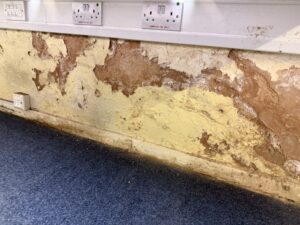
Rising damp, on the other hand, comes from the ground and travels upwards through masonry. It typically shows as a band of dampness at low level, sometimes with salt deposits or crumbling plaster. Despite its reputation, true rising damp is relatively uncommon.

Why Traditional Buildings Need a Different Approach
In traditional properties, modern cement-based renders and plasters can make matters worse by trapping moisture where older buildings were designed to breathe. Correct diagnosis relies on understanding how these buildings work, rather than relying solely on electronic readings.
Choosing the Right Solution
Once the cause is clear, solutions become far more effective. Condensation is usually tackled through improved ventilation and moisture control, while genuine rising damp requires careful consideration of materials and detailing rather than off‑the‑shelf treatments. We regularly see clients relieved to learn they don’t need the invasive works they were first advised to carry out.
Condensation vs. Rising Damp FAQs
Is black mould always a sign of rising damp?
No. Black mould is far more commonly linked to condensation and humidity.

Do older houses need to breathe?
Yes. Traditional buildings rely on moisture evaporation,
which modern impermeable materials can disrupt.
Will a damp survey tell me what not to do?
Often, yes. Avoiding inappropriate work can be just as important
as recommending the right solution.
For further information on damp surveys, please read:
What Does a Damp Survey Involve? A Step-by-Step Guide for Homeowners and Buyers
Damp Survey and Moisture Diagnostics
What Can a Damp Survey Tell You? Hidden Moisture Risks in Older Homes
[/fusion_text][/fusion_builder_column][/fusion_builder_row][/fusion_builder_container]Share this article

Written by : Allan Williams-Jones
Allan Williams-Jones joined in 2018 bringing a wealth of experience gained both internationally and domestically to deliver client focused project work. Allan specialises in development delivery from initial inspection, navigating planning pitfalls, contract administration to final completion. He has worked on numerous schemes on a wide variety of residential and commercial buildings. Allan has played a lead role in providing repair and maintenance advice and overseeing major refurbishment projects. Allan maintains a diverse workload and takes great interest in building diagnostics and performing general condition and building surveys.
Qualifications: MA, MBA, MSc, MRICS
A quick overview of the topics covered in this article.


